What is Tesla trying to build?
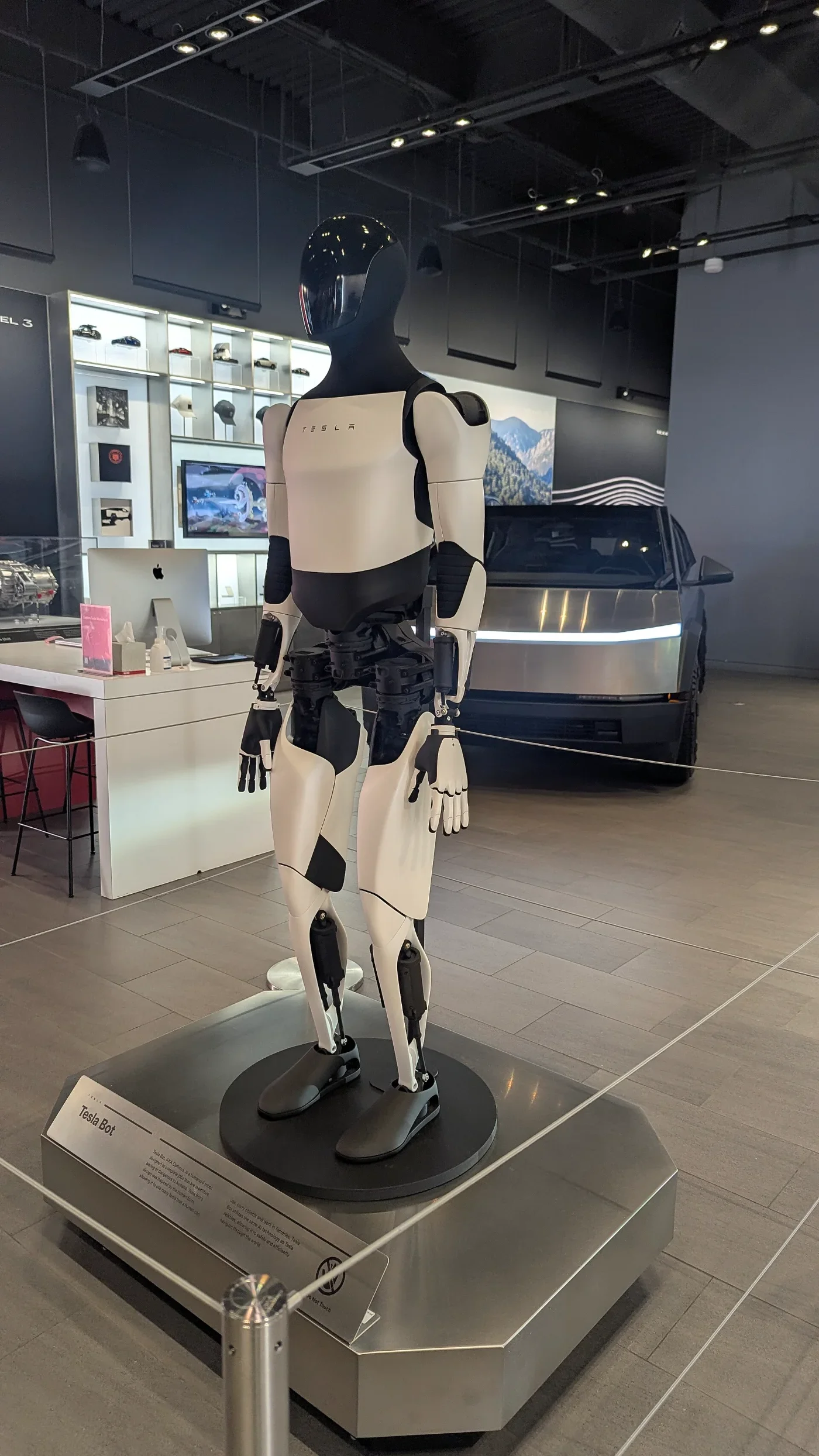
Tesla describes Optimus as a general-purpose, bipedal humanoid robot intended to perform unsafe, repetitive or boring tasks. That is the project's stated goal, rather than evidence that a consumer can order a robot capable of every household job. Tesla's robotics overview.
The appeal is easy to understand: many useful activities involve movement through spaces designed around people. Our interpretation is that a human-shaped machine invites questions about whether existing workspaces could be used without rebuilding every station around a fixed machine. The answer depends on the task and the environment, not the shape alone.
What is new in the October production update?
Tesla's October 21, 2026 quarterly update says Optimus production began in Fremont and lists the California program as an early ramp. The company also says it will continue iterating on hardware and manufacturing. These are Tesla's reported milestones. Manufacturing section, slide 6.
A production milestone answers a manufacturing question. It leaves other questions open: who can obtain a unit, which tasks are supported, what training is needed, how assistance works and what happens when the robot encounters something unfamiliar. Our research did not establish consumer ordering or household delivery terms.
Which potential benefits are worth following?
- Less repetitive handling: look for a complete task demonstrated repeatedly, including picking up an object, placing it accurately and recovering from a failed attempt.
- Reduced exposure to an unpleasant task: ask what hazards remain, how people are kept clear and what independent evidence supports the proposed operating conditions.
- More flexible automation: examine how much preparation is required when an object, location or instruction changes. Flexibility needs more evidence than a single successful demonstration.
How should you read an impressive robot video?
Start with the unglamorous details. Is the sequence continuous? Is a person remotely helping? Were the objects selected in advance? How often did the task succeed, and what happened after a mistake? These are useful evaluation questions, not allegations about a particular demonstration.
For now, Optimus belongs in Discover as a technology explainer. We have no basis to recommend it as a household purchase, promise labor savings or attach a shopping call to action. Its potential is a reason to follow the evidence as the program develops, with each new milestone dated and described precisely.
Research notes
Sources & what we checked
Official documentation checked on October 23, 2026. Features and terms may change. The workflow suggestions and fit assessments are our editorial interpretation, not measured performance results.