OpenAI is coming to Google Cloud: what it means for your business
Ingerios analysis · Reviewed October 23, 2026
A new partnership between two major AI companies is getting attention. For a small business owner, the useful question is straightforward: could this make an existing task easier to manage, or would it simply add another tool to the stack?
What was actually announced?
On October 21, Google Cloud announced that OpenAI models are coming to its Model Garden, starting with a private preview for selected enterprise customers. The announcement describes Marketplace purchasing through existing Google Cloud commitments. Some related integrations and data controls are described as coming later. This is an announced rollout, not confirmation that every business account can use every feature today. Read Google Cloud’s announcement.
Reuters also covered the deal, giving the story visibility beyond the companies’ own channels. Media attention, however, does not establish that switching platforms will improve your business.
Our take: start with the task, not the platform
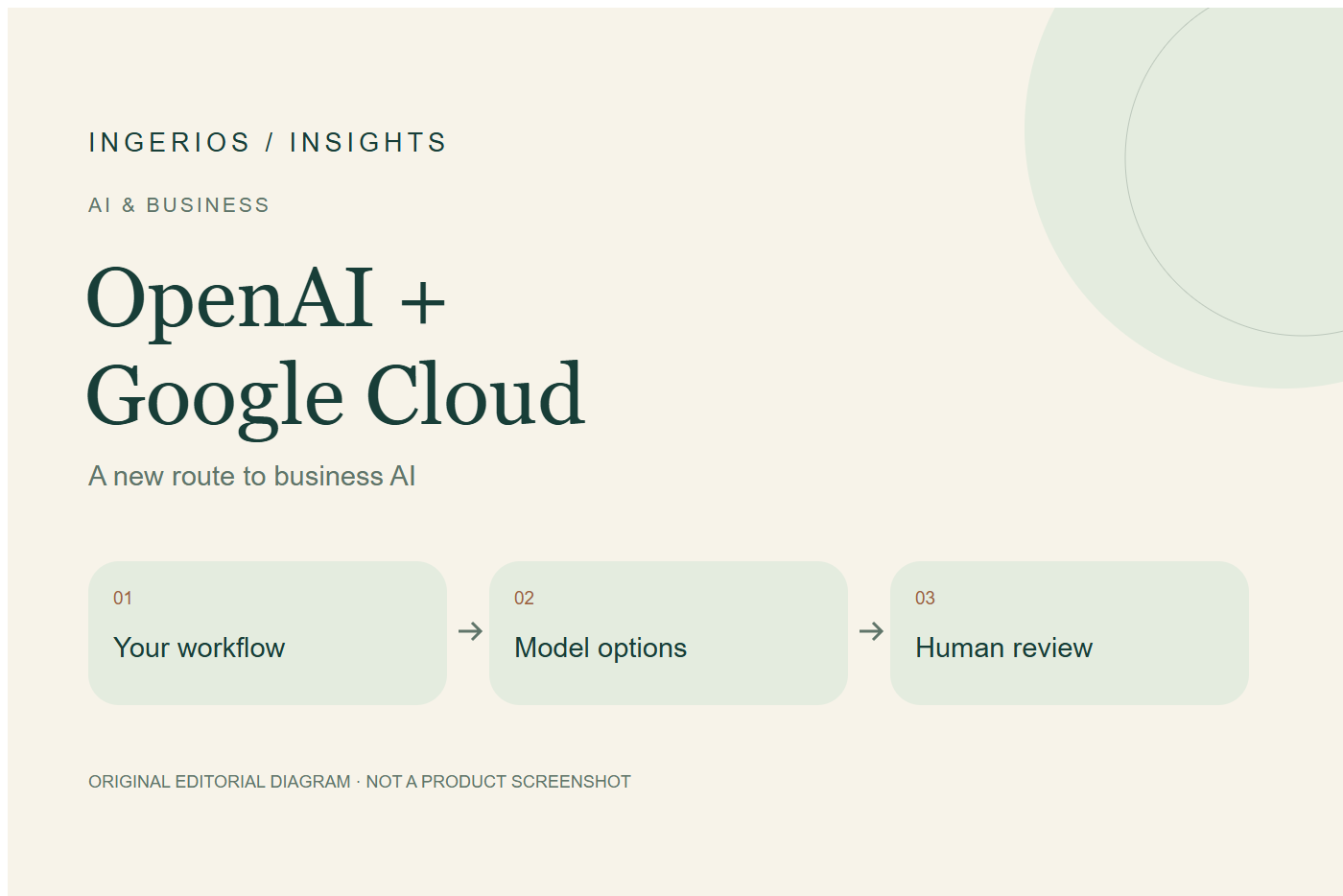
Imagine a small service company that spends several hours each week turning customer notes into draft estimates. That is a possible pilot: the input is recognizable, the output can be reviewed and the owner can compare the result with the current process. Buying a new platform before defining that task reverses the useful order of decisions.
Write a short description of the problem first. Who does the work today? What information is needed? What makes an answer acceptable? Who signs off before anything reaches a customer? These questions give you a way to evaluate any AI option, including one you already pay for.
Four checks before you move a workflow
- Confirm access. Ask which features are available to your specific account, in your region and under your contract. Keep preview access separate from a production commitment.
- Compare the complete cost. Include setup, integrations, staff review and support. A convenient invoice is useful, but it is only one part of the operating cost.
- Map the information involved. List the customer records, documents and credentials the task would need. Have the person responsible for those systems review the proposed access and applicable terms.
- Keep an exit route. Save your instructions, evaluation examples and approved outputs somewhere your team controls. Document how the task would continue if the tool became unavailable.
A practical two-week evaluation
For a first experiment, we recommend a small set of representative examples using information you are authorized to process. Compare the current workflow with the proposed one. Record the time spent drafting and correcting, the number of factual errors and the quality of the finished work.
Agree on a pass condition before looking at the results. For example, the owner might require that every price and service detail match an approved source, with a measurable reduction in total review time. This is a suggested evaluation method, not a claim about results Ingerios has achieved with the new offering.
If your present tools already handle the task well, waiting may be a sensible decision. If procurement or integration has been the obstacle, this announcement gives you a reason to ask more specific questions.
Your next step
Choose one repeatable task and write its acceptance checklist. A clear process will help you judge this partnership—and the next AI headline—on business value. Talk with Ingerios about mapping a workflow before choosing the tools.
Sources and editorial note
Original article based on public announcements and documentation. Recommendations are Ingerios analysis, not results from a product test or a paid partnership. Availability may change.